
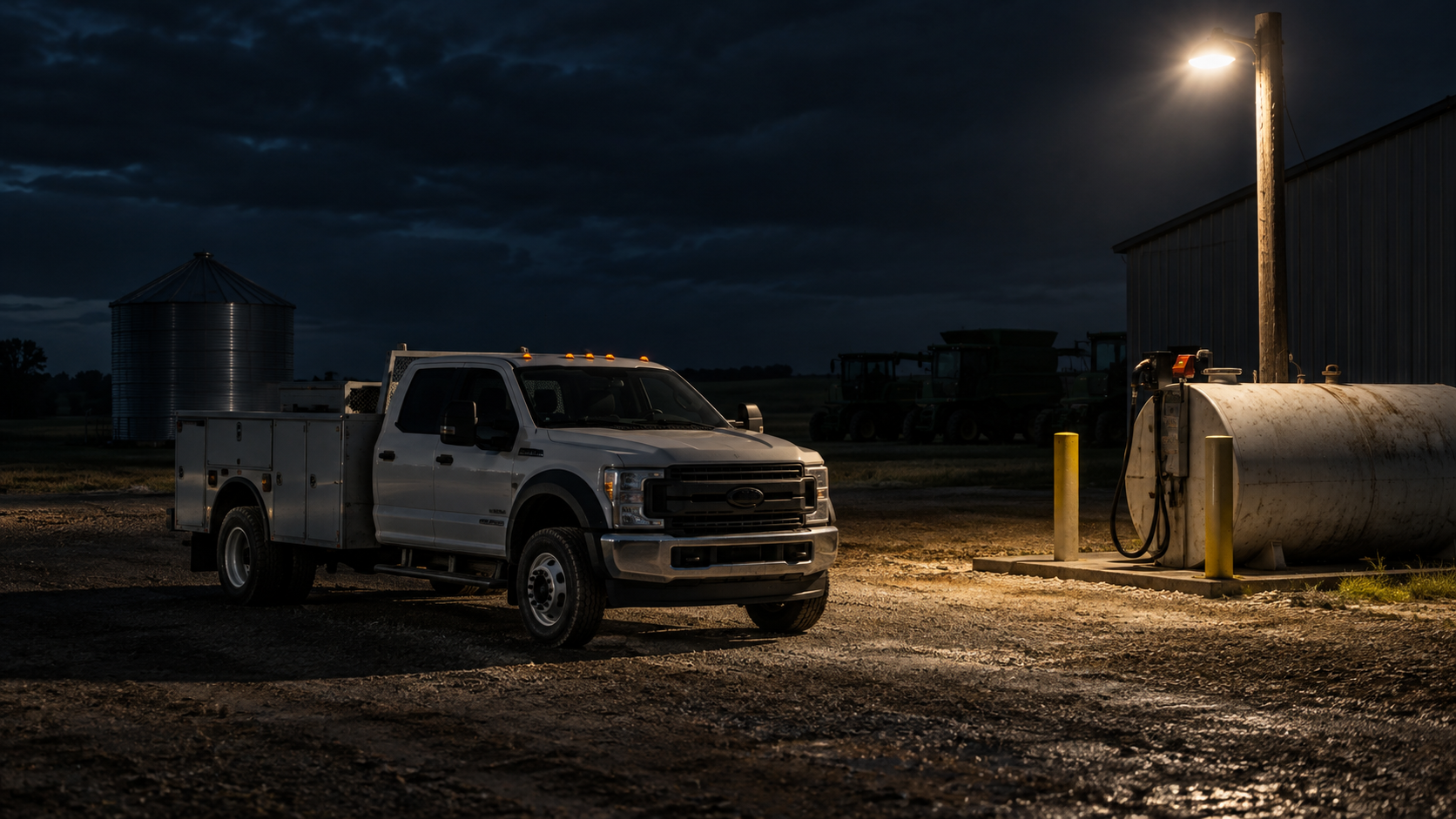
On September 23, 2026, Wisconsin fuel supplier Michlig Energy sent a warning to its customers: fuel theft is rising in rural areas, and high fuel prices are a big part of the reason. The company urged farms, businesses, and anyone else who stores or runs on fuel to take precautions now, before they become the next target. Read the original report from Regional Media News.
The warning was written for farm tanks and bulk storage, but it applies just as much to the work trucks parked next to them. A service-body truck, a flatbed, or a dump truck sitting overnight in an equipment yard is carrying a full saddle tank of diesel that is often easier to reach than the storage tank itself.
Why Fuel Theft Rises When Prices Rise
The math is simple for a thief. When diesel costs more, every gallon is worth more, and it is easy to resell or burn in their own equipment. As Michlig Energy pointed out, even a few hundred gallons taken from a farm or business can add up to thousands of dollars in losses. For a fleet, that loss rarely shows up as one big event. It shows up as trucks that need fuel sooner than they should, fuel cards that look high, and jobs that start late because a truck came up empty.
What Michlig Energy Recommends
The supplier gave its customers a short list of practical steps:
- Install locking caps on fuel tanks.
- Consider security cameras around fuel storage areas.
- Keep portable fuel tanks out of sight from the road whenever possible.
- Track fuel usage or check tank volumes regularly to catch missing fuel early.
- Improve lighting around fuel storage and tank areas.
They also asked customers to stay alert, watch for unusual activity, and never confront anyone they see near a fuel tank. Call local law enforcement instead.
Applying That Advice to Your Work Trucks
Lock the fuel, not just the yard
A gate and a fence slow people down, but rural yards are big, often open, and empty at night. The last line of defense is the truck itself. A locking cap is a start, but a cap still sits out in the open where it can be pried, cut, or twisted off in seconds. An armored locking fuel door covers the whole filler area so there is nothing exposed to attack.
Park with theft in mind
Park trucks with the fuel side facing a wall, another vehicle, or a lit area you can see from the road or a camera. Do not leave trucks lined up fuel-side-out along the back fence where nobody will notice someone working at them.
Light and cameras where the trucks sleep
The same lighting and cameras recommended for storage tanks should cover the spots where trucks are parked overnight. Motion-activated lights are cheap and they make a thief feel watched.
Track fuel per truck
Compare fuel purchases against miles, engine hours, and jobs for each truck. When one truck suddenly needs more fuel than its route explains, that is often the first sign someone is helping themselves. Our fleet savings calculator can show what even a small loss rate costs across your fleet.
Protect DEF too
Thieves who come for diesel sometimes tamper with or steal DEF as well, and a contaminated DEF tank can sideline a truck. Treat both fill points as things worth protecting.
Stay Alert, Stay Safe
If you see someone around your trucks or fuel storage at night, do not walk out to confront them. Note what you can from a safe place, such as a vehicle description and plate, and call law enforcement. Fuel can be replaced. People cannot.
Protect the Fuel Door, Not Just the Cap
The Work Truck Fuel Vault is a patent-pending armored locking fuel door that bolts over the existing fuel door opening on commercial work trucks. It installs in minutes with common hand tools, needs no drilling into the chassis and no wiring, and does not touch the fuel system.
Every unit ships free within the fifty United States and carries a limited lifetime warranty against defects plus a 30-day money-back guarantee. Not sure which size fits your truck? Check the fitment finder, or call 941-541-0089 and talk to a real person in Sarasota, Florida.
Source: Regional Media News, "Michlig Energy Warns Rural Customers to Secure Fuel Amid Rising Theft," published September 23, 2026.