
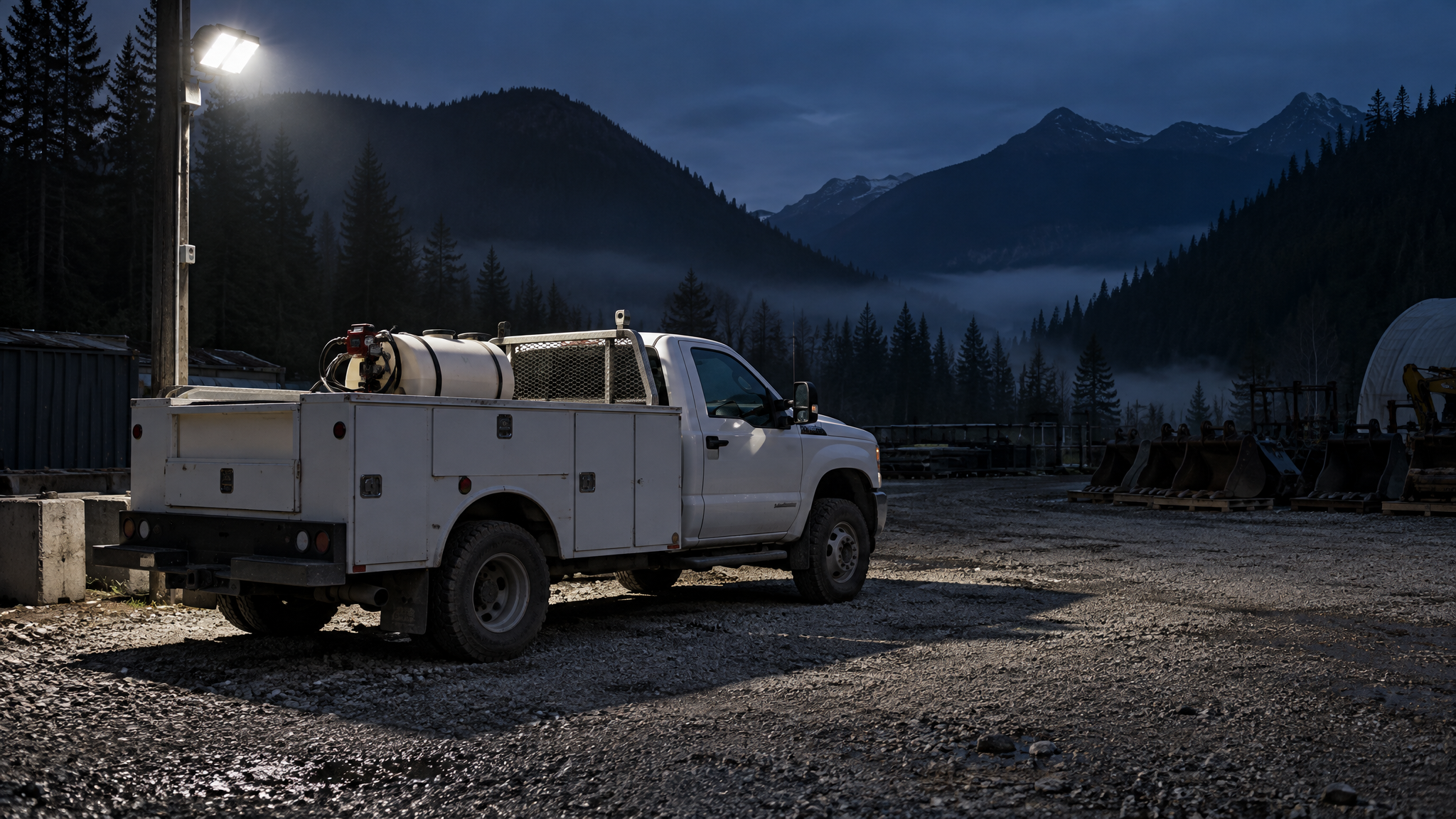
Short answer: On October 29, 2026, the Creston RCMP in British Columbia warned that gasoline and diesel thefts are rising across the Creston Valley, with thieves going after work trucks and auxiliary "tidy tank" fuel storage, sometimes drilling into tanks. Police advise secure, well-lit parking, cameras or motion lights, locking fuel caps and other anti-theft devices, and regular checks for tampering. On a work truck, the fastest fix is to lock the whole fuel door so there is no exposed cap to attack.
What Happened in the Creston Valley
The Creston RCMP said officers have responded to several fuel thefts in the area. Both gas and diesel are being taken, and work trucks and tidy tanks (the auxiliary transfer tanks many contractors and farmers carry in a truck bed) are frequent targets. In some cases, thieves drilled into tanks to drain them.
Police noted that the thefts are hurting local businesses, contractors, farmers and residents who depend on those trucks and that equipment every day. Cpl. Brett Urano, a BC RCMP media relations officer, asked the community to take precautions while the investigation continues. You can read the original coverage from e-KNOW and My Creston Now.
The RCMP's Fuel Theft Prevention Checklist
The detachment shared five practical steps for vehicle and equipment owners:
- Park in secure, locked areas, such as a garage or compound, whenever you can.
- Choose well-lit parking spots.
- Use security cameras or motion-activated lighting where vehicles are stored.
- Install locking fuel caps and other anti-theft devices.
- Inspect fuel tanks and vehicles regularly for signs of tampering.
They also asked anyone who sees suspicious activity around fuel tanks, parked vehicles or work sites to call the Creston RCMP right away.
Why Work Trucks Get Hit First
A work truck parked overnight is an easy target. It usually carries a full saddle tank of diesel, it is often parked fuel-side-out along a fence or at a jobsite, and many carry a tidy tank in the bed holding even more fuel. On most chassis cab and service body trucks, the fuel cap sits behind an unlocked door or right out in the open. With a hose and a few minutes in the dark, a thief can be gone before anyone notices.
The losses add up beyond the fuel itself. A truck that shows up empty does not roll on time, crews wait around, and contamination from a tampered filler can damage a modern diesel's injectors and fuel pump.
Turning the RCMP's Advice Into a Plan for Your Fleet
1. Lock the fuel door, not just the cap
The RCMP recommends locking fuel caps, and that is a good start. The weak spot is that the cap is still exposed. It can be pried, twisted or cut off with basic tools. An armored locking fuel door covers the entire filler area, so there is nothing to grab. If you also run an exposed DEF cap, lock that too.
2. Park with the fuel side protected
Back trucks in so the fuel side faces a wall, another truck, or a lit area that a camera can see. Do not line trucks up fuel-side-out along the back fence.
3. Light and cameras where the trucks sleep
Motion lights are cheap and make thieves feel watched. Point cameras at the fuel side of parked trucks and at tidy tanks, not just at the gate.
4. Secure the tidy tank
Lock the nozzle and pump on bed-mounted transfer tanks, and do not leave a full tidy tank in a truck parked at an open jobsite overnight if you can avoid it.
5. Walk around every morning
Check fuel levels against where they were at the end of the day. Look for pry marks around the fuel door, fuel stains on the ground, and fresh holes or wet spots on the tank. Our fleet savings calculator shows what even a small loss rate costs across a fleet.
What a Locking Fuel Door Will and Won't Do
A locking fuel door stops the most common attack: someone opening the filler and siphoning. It will not stop a thief who is determined to drill into the tank itself, which the RCMP says has happened in Creston. That is why the other steps on the list matter too. Layered protection works best: lock the filler, park smart, light it up, and check your trucks.
Frequently Asked Questions
What did the Creston RCMP warn about in October 2026?
On October 29, 2026, the Creston RCMP in British Columbia warned the public about a rise in gasoline and diesel thefts across the Creston Valley. Thieves were targeting work trucks and auxiliary "tidy tank" fuel storage, in some cases drilling into tanks, causing losses for local businesses, contractors, farmers and residents.
What does the RCMP recommend to prevent fuel theft from work trucks?
The Creston RCMP recommended parking in secure, locked areas such as garages or compounds when possible, choosing well-lit parking spots, using security cameras or motion-activated lighting, installing locking fuel caps and other anti-theft devices, and regularly checking tanks and vehicles for signs of tampering. They also asked the public to report suspicious activity around fuel tanks, parked vehicles and work sites.
Is a locking fuel cap enough to stop diesel theft on a work truck?
A locking fuel cap is a good first step, but on most work trucks the cap sits exposed where it can be pried, twisted or cut off in seconds. A locking fuel door, such as The Work Truck Fuel Vault, covers the entire filler area so there is no cap for a thief to reach.
Does a locking fuel door stop thieves who drill into the fuel tank?
No. A locking fuel door protects the filler neck, which is the fastest and quietest way to siphon fuel. Thieves who drill or puncture a tank are bypassing the filler entirely, so secure parking, lighting, cameras and regular tank inspections are still needed alongside a locked fuel door.
How do I know if fuel is being stolen from my work trucks?
Look for tanks that read lower in the morning than when the truck was parked, fuel purchases that do not line up with miles or engine hours, scratches or pry marks around the fuel door or cap, fuel smells or stains on the ground, and fresh holes or wet spots on the tank. Comparing fuel use per truck week to week is the quickest way to spot a problem.
Protect the Fuel Door, Not Just the Cap
The Work Truck Fuel Vault is a patent-pending armored locking fuel door that bolts over the existing fuel door opening on commercial work trucks. It installs in minutes with common hand tools, needs no drilling into the chassis and no wiring, and does not touch the fuel system. Security screws are included with every door.
Shipping is by UPS and calculated at checkout. Every door carries a limited lifetime warranty against defects and a 30-day money-back guarantee. Check your truck with Find My Fit™, or call 941-541-0089 to talk to a real person in Sarasota, Florida. Fleet buyers outside the U.S. should call before ordering.
Sources: e-KNOW, "Creston RCMP warn public after increase in fuel thefts," and My Creston Now, "Creston RCMP warn the public about rise in fuel thefts," both published October 29, 2026.